Get a LEI number here
LEI (Legal Entity Identifier) is the equivalent to an international business registration number. The LEI number is mandatory for many entities, in order to trade. Get a LEI number fast and at a low cost right here. 1 year C$94.
Get a new LEI number same day if you order before 11 AM (in 95% of cases).
Fast and easy process


LEI number application - in 1 minute
No Corporation Number?

LEI code prices
Find the solution with the best fit below – all our solutions include free support by phone and unlimited e-mail support.
New LEI code
Renew LEI
Renew your existing LEI code
Transfer and LEI number renewal
Transfer and LEI number renewal
Why choose LEI Service?
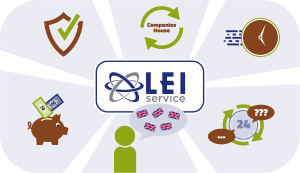
- Quick, easy and safe LEI registration
- Affordable LEI number
- Automatic renewal of LEI possible
- Phone and e-mail support
- We always reply within 24 hours – guaranteed!
What is a LEI number / LEI code?
Think of an LEI as an international business registration number. The LEI is used to identify the parties involved in financial transactions worldwide.
An LEI costs a fee and must be renewed every year. Corporations, funds, trusts, charities and other legal entities may all need an LEI – in short, any legal entity that trades or reports derivatives, or trades on international markets.
Who needs an LEI in Canada?
Canada’s derivatives trade reporting rules, set by the provincial securities regulators, require the parties to an OTC derivative to be identified by their LEI. Since the amended rules took effect on July 25, 2025, a counterparty that is eligible for an LEI must obtain one and keep it renewed. If your company trades OTC derivatives, such as FX forwards or swaps, your bank or counterparty will ask for your LEI.
Canadian companies that trade shares, bonds or derivatives through brokers in the EU or UK also need an LEI: brokers there may not execute trades for clients without a valid LEI (MiFIR/UK MiFIR).
Many banks don’t accept a lapsed LEI, and you risk not being able to trade.
LEI number explained in 30 seconds
- Legal entities that trade or report derivatives need an LEI
- Creates transparency, because everyone involved in financial transactions can be identified worldwide
- LEI data answers two questions: “Who is who?” and “Who owns whom?” (direct and ultimate parent company)
- LEIs are issued by Local Operating Units (LOUs) such as RapidLEI, which are accredited by GLEIF. GLEIF publishes all LEI data free of charge, and the Regulatory Oversight Committee (ROC) oversees the system
A Legal Entity Identifier example for LEI Service ApS with the LEI: 9845 008599005596A4 56
- Characters 1–4: prefix of the issuing LOU (9845 = RapidLEI)
- Characters 5–18: unique part for the legal entity
- Characters 19–20: check digits
Who can issue an LEI number?
GLEIF, a not-for-profit foundation based in Basel, coordinates the global LEI system. LEIs are issued by accredited Local Operating Units (LOUs) such as RapidLEI. Registration agents such as LEI Service help companies apply.
The ROC – a group of public authorities from around the world – oversees the system.
GLEIF’s free LEI search shows whether an LEI is valid (“Issued”) or lapsed, and when it’s due for renewal.
LEI number terms
Enter your corporation number, Business Number (BN) or company name and confirm the details from the official registry. Add details of your parent company, if any – we then submit the application to RapidLEI on your behalf. Your LEI is usually issued within 2–48 hours, unless RapidLEI needs more information from you. For funds, trusts and other entities without a registry number, contact us and we’ll help you apply.
The GLEIF Legal Entity Identifier LEI database is updated several times daily, but it is not certain that your bank or investment platform do more than one daily check if any at all. They might want to wait until it can be verified with the legal entity identifier database. (even though the LEI code is valid when issued).
It is important to make sure that the underlying information concerning the legal entities listed in the LEI Index is up to date. Therefore, the data must be updated on a yearly basis. This is considered a LEI number renewal.
LEI Service offer the possibility to purchase multiyear renewals, where we will update the LEI based on official sources. The legal entity is obligated to inform us of any changes made to this information so that we are able to update the GLEIF Index with the new data via RapidLei. We do this at no cost for you.
Your LEI gets the status “Lapsed”. Many banks don’t accept a lapsed LEI, and you risk not being able to trade. Renew in good time.
The data of the LEI is referred to as the reference data. The legal entity behind each LEI is responsible for notifying its LEI issuer of any changes. Anyone can challenge the data of an LEI via GLEIF; the managing LEI issuer then reviews it free of charge.
GLEIF monitors data quality across the whole system.
You can read more about data quality here.
The GLEIF LEI database is updated several times a day. It may take up to 24 hours before your bank can verify a new LEI registration. Another source of error is if your LEI has lapsed and it is no longer valid. This can be caused if you forgot to renew it and that is why you cannot conduct any trades. Let us help you renew it.
Generally no. However, since 2015, sole traders acting in a business capacity can obtain an LEI under certain conditions (ROC statement). You can read the statement here.
About the LEI system
GLEIF is a not-for-profit organisation established by the Financial Stability Board in June 2014. GLEIF was founded to support the implementation and use of LEIs.
GLEIF is based in Basel, Switzerland. The main task of GLEIF is to ensure operational integrity of the global LEI system. GLEIF also makes available the technical infrastructure for anyone who wishes to access the complete global legal entity identifier LEI database.
You can find more information about GLEIF here.
In 2011, the G20 countries asked the Financial Stability Board (FSB) to make recommendations for a global Legal Entity Identifier (LEI) system and oversight of this.
This led to the development of the global LEI system, where each LEI uniquely identifies legal entities participating in financial transactions. FSB underlined that a global acceptance of the LEI system will help with several financial stability goals. It also provides some advantages to the private sector.
More information on the global LEI system can be found here.
The LEI System is made up of three layers:
- Layer 1 is LEI Regulatory Oversight Committee: Consists of multiple public authorities from various nations and it was established in 2013 to coordinate and supervise the framework of the global Legal Entity Identifier system.
- Layer 2 is the Global Legal Entity Identifier Foundation (GLEIF): Established in 2014 by the Financial Stability Board. GLEIF is a not-for-profit organisation meant to help with the use of and implementation of LEIs. GLEIF’s job is to ensure that the global Legal Entity Identifier system has operational integrity.
- Layer 3 is LEI issuing organisations: The issuers of LEIs are also called Local Operating Units (LOUs). LOUs handle LEI registration, LEI renewal and complementary services.
- In addition, registration agents such as LEI Service help companies apply and submit applications to an LOU.
You can find more information here.
The Legal Entity Identifier (LEI) links key data enabling a unique identification of legal entities that participate in financial transactions across the globe. The LEI data is made publicly available to create and improve transparency in the global markets.
The free information provides standardised information on legal entities on a global scale. The data incorporated in each LEI is verified through procedures and protocols set by the LEI Regulatory Oversight Committee. LEI data answers two questions: “Who is who?” (Level 1: name, address, registration number) and “Who owns whom?” (Level 2: direct and ultimate parent company).
The LEI is a 20-character alphanumeric code that corporations, funds and charities may need in order to comply with Canadian derivatives reporting rules, or with rules in other countries such as MiFIR in the EU and UK.