LEI Renewal: When to Renew and What Happens If You Don’t
An LEI can look permanent because the number itself does not change, yet its active status does. That detail matters more than many organizations expect.
If your business, fund, charity, or other legal entity relies on an LEI for trading, reporting, or counterparty checks, the real question is not whether you already have one. It is whether that LEI is still active on the day you need it. The renewal deadline is the line between smooth market access and a sudden compliance problem.
What the LEI renewal deadline means
A Legal Entity Identifier is issued for one year at a time. Each year, the entity’s reference data must be checked again so the global LEI system stays current and reliable. That is why every LEI record has a Next Renewal Date.
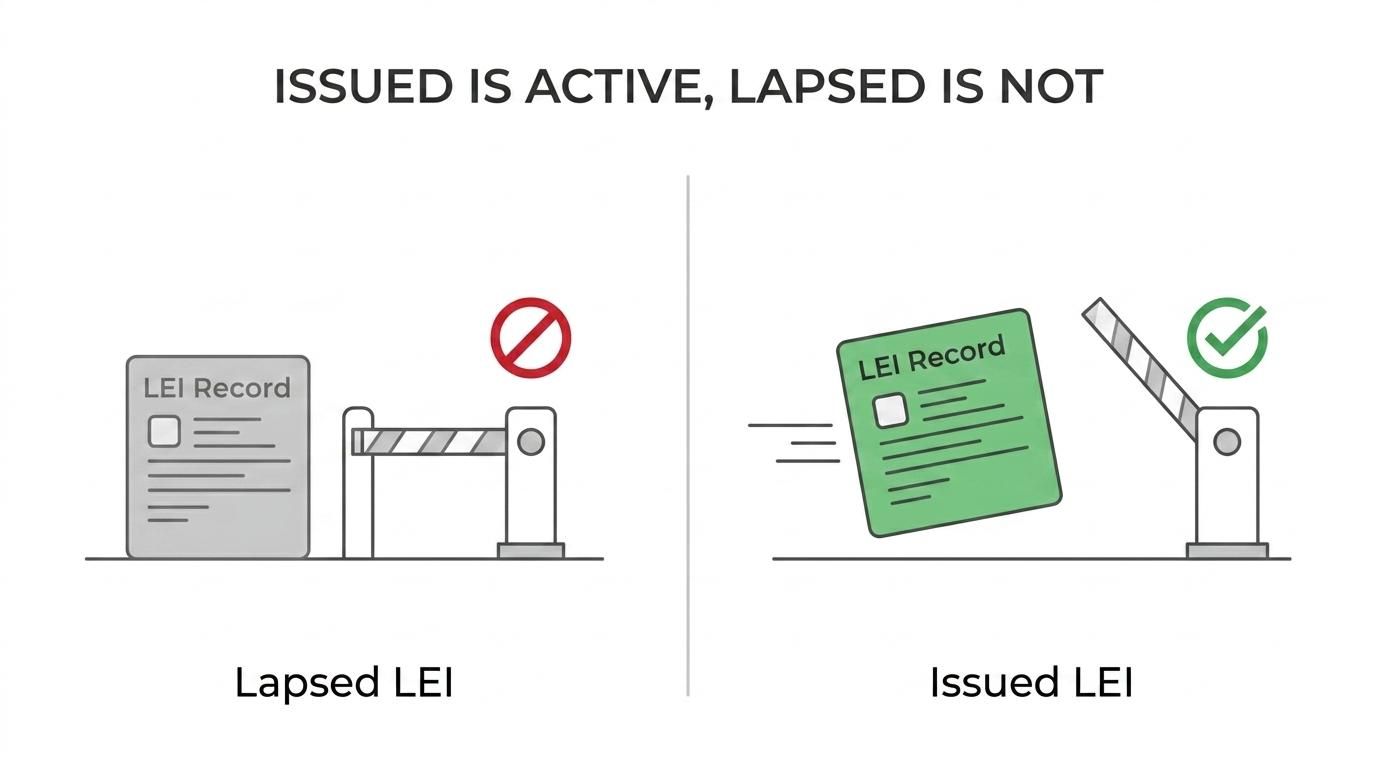
When the LEI is renewed on time, its status stays active. If it is not renewed by the due date, the status usually changes from Issued to Lapsed. The code still belongs to the same entity, but it is no longer current for many regulated uses.
This is the key point: the renewal deadline is not about getting a new number every year. It is about keeping the existing number valid and trusted.
| LEI stage | GLEIF status | What it means | Typical result |
|---|---|---|---|
| Newly registered or renewed | Issued | Reference data has been validated and the LEI is active | Can generally be used for trading and reporting where an active LEI is required |
| Past renewal date, not renewed | Lapsed | The LEI still exists, but the annual validation is overdue | Transactions may be blocked, and reporting may become non-compliant |
| Renewed after lapse | Issued | The same LEI is reactivated after validation and payment | Activity can resume once the renewal is processed |
When to renew an LEI before it expires
The safest approach is to renew before the due date, not after it.
Many LEI providers allow renewal within roughly 60 days before expiry. That window is practical for a reason. It gives enough time to complete the validation without leaving a gap, while also helping you avoid paying too early and losing part of the period you already had.
Renewing far in advance is not always helpful. In some cases, if a renewal is processed too early, the next one-year period may run from the renewal date rather than from the old expiry date. That can shorten the value of what you already paid for. A 60-day window is often the sensible balance.
After reviewing your LEI record, keep these timing habits in mind:
- Check the Next Renewal Date
- Aim for the last 60 days before expiry
- Allow extra time for internal approvals
- Review any recent company data changes
- Consider a multi-year renewal plan
If your entity depends on uninterrupted access to securities or derivatives markets, leaving renewal to the final day is a risky habit.
What happens if you miss the LEI renewal deadline
The immediate result is simple: your LEI becomes lapsed.
The wider impact can be much more serious. A lapsed LEI can interrupt trading, delay onboarding, create reporting errors, and raise questions with banks, brokers, and counterparties. Even where a system does not block a transaction automatically, the entity may still be exposed to a compliance breach.
Here is where the pressure usually shows up first:
- Regulatory status: a lapsed LEI can mean the entity is no longer meeting rules that require an active LEI for reporting or trading
- Transaction flow: banks, platforms, and counterparties may reject or pause trades until the LEI is active again
- Operational disruption: urgent deals can stall while someone scrambles to renew the record
- Public visibility: the lapse is visible in LEI records, which can affect confidence during due diligence
- Internal workload: finance and compliance teams may need to fix blocked reports or resubmit data
There is one piece of good news. The LEI system itself does not usually impose a special late-renewal penalty. In other words, there is generally no separate GLEIF fine just because the LEI lapsed.
That said, the absence of a late fee does not make the lapse harmless. The real cost often appears elsewhere: missed trading windows, reporting failures, strained counterparty relationships, or regulator attention if an active LEI was required and not maintained.
LEI renewal deadline rules in Canada
Canadian entities should pay close attention to this issue, especially in derivatives markets.
Canadian securities regulators have moved toward stricter use of active LEIs in derivatives data reporting. Effective July 25, 2025, OTC derivatives trades in Canada are expected to use an active, non-lapsed LEI. That means annual renewal is not just tidy administration. It is a direct compliance step.
For a Canadian reporting entity, investment vehicle, treasury operation, or market participant, a lapsed LEI can shift from being an inconvenience to being a legal problem. If the LEI is inactive when the transaction is reported, that can place the entity outside the rule set.
This matches the broader direction seen in other major markets. European rules tied to MiFID II and MiFIR already treat an active LEI as a condition for certain reporting and trading activity. Canada is clearly reinforcing the same message: keep the LEI current before you need it.
Can you renew a lapsed LEI instead of getting a new one?
Yes, and that distinction matters.
An LEI is meant to be unique to one legal entity. If your LEI has lapsed, you do not apply for a second LEI as a replacement. You renew the existing one and bring it back to active status.
That is usually done by submitting a standard renewal request, updating or confirming the entity data, and paying the renewal fee. If the LEI was originally registered through another provider, you can often transfer it to a new registration agent and renew it there.
The record will still show its history, including the fact that it once lapsed. So while reactivation is straightforward, preventing the lapse in the first place is usually the better path.
How the LEI renewal process usually works
Renewal is often much simpler than first-time registration. Most of the heavy lifting is in confirming that the legal entity data is still correct and that the person placing the order has authority to do so.
A typical renewal process looks like this:
- Locate the entity using its legal name, corporation number, or existing LEI details.
- Choose the renewal term, often one year or a multi-year option.
- Confirm signing authority or authorization to act for the entity.
- Review the reference data and correct any changes in name, address, legal form, or registry details.
- Submit payment so the renewal can be processed and validated.
In many cases, no extra documents are needed if the official registry data is clear and current. If the entity has gone through a merger, name change, or other material update, the provider may need more information before the renewal can be completed.
How LEI Service handles LEI renewal for Canadian entities
For Canadian organizations that want a faster and less manual process, LEI Service offers renewal, transfer-and-renewal, and multi-year management for existing LEIs.
The process is designed to be practical. An entity can usually be found through a corporation number or legal name, which helps reduce the chance of duplicate entries. Registry data and GLEIF lookups are used to match the right record and verify details before the renewal goes through.
There are also a few service features that stand out for teams that do not want LEI upkeep turning into another annual admin task:
- Fast processing: same-day issuance is available for eligible orders placed before 11 AM, with an express option that can be completed within 2 hours
- Multi-year management: plans can reduce the annual cost to about C$69 per year, with GLEIF fees included
- Support access: free phone support and unlimited email support are available
- Data maintenance: reference data updates are handled without extra charge during the managed term
If your LEI is held with another provider, a transfer and renewal can usually be arranged as well. Where timing rules apply, this is often done once the LEI is within about 60 days of expiry.
For organizations managing several entities, bulk arrangements can also make renewal more orderly.
Practical ways to avoid a lapsed LEI
The strongest renewal strategy is the one that does not rely on memory.
Annual compliance tasks slip most often when ownership is unclear, reminders are scattered, or entity data changes are not shared between legal, finance, and operations. A short internal routine can prevent most of that.
A workable checklist looks like this:
- Assign ownership: one team or individual should be responsible for checking the LEI status each year
- Calendar reminders 60, 30, and 7 days before expiry
- Review entity data: confirm the legal name, address, registration details, and parent information are still current
- Multi-year renewal where suitable
- Plan for urgency: if a trade or filing is time-sensitive, use a provider that can process renewals quickly
- Check the public LEI status before key reporting dates
An active LEI is a small administrative detail until the day it is not. Then it becomes a gatekeeper for compliance, reporting, and market access all at once. Keeping that record current, early enough and with the right provider support, is one of the easiest ways to protect trading continuity in Canada.